
A commercial DSCR loan qualifies a property based on the income it generates, not your personal tax returns or W2s. Lenders typically want a debt service coverage ratio of at least 1.25x, meaning the property's net operating income covers its annual mortgage payment by a quarter or more. It works for office, retail, industrial, hospitality, self-storage, mixed-use, and multifamily properties with five or more units. Run your numbers through a DSCR calculator before you shop for a lender, then start gathering leases, rent rolls, and entity documents.
TL;DR:
- Commercial DSCR loans require a minimum ratio of 1.25x, meaning the property's net operating income must cover its annual debt payments by at least 25 percent.
- Normalized NOI calculations exclude one-time income, add back depreciation, and account for market vacancy factors, which can lower the effective DSCR from initial projections.
- Eligible property types include office, retail, industrial, hospitality, self-storage, mixed-use, and multifamily with five or more units, with underwriting standards varying by asset class.
- Loan terms typically feature interest rates starting around 10.49 percent, with down payments of 20 to 30 percent and prepayment penalties like yield-maintenance or step-down structures.
- The full underwriting process takes approximately two to four weeks, with delays often caused by missing documents, appraisal issues, or environmental reports.
Table of Contents
- What Is a Commercial DSCR Loan and How Do You Calculate It?
- Which Commercial Property Types Qualify for DSCR Loans?
- What Are Typical Rates, LTVs, and Loan Terms?
- What Documents Do You Need to Qualify for a DSCR Loan?
- How Long Does It Take to Close a Commercial DSCR Loan?
- How Does DSCR Math Change Across Different Deal Types?
- How Mayday Approaches Commercial DSCR Deals
- Ready to Run Your Deal Through Mayday?
- Sources
- FAQ
What Is a Commercial DSCR Loan and How Do You Calculate It?
The formula is simple: net operating income divided by annual debt service equals your DSCR. NOI is what the property earns after operating expenses but before mortgage payments and taxes on the loan itself. Annual debt service is the total of principal and interest you'd owe on the loan over twelve months.
Here's a quick example. Say a retail strip center generates $180,000 in NOI. The proposed loan carries annual debt service of $144,000. Divide $180,000 by $144,000 and you get a DSCR of 1.25x, which sits right at the typical minimum for commercial DSCR financing.
Why 1.25x specifically? It gives the lender a cushion. If income dips 10% from a vacancy or a rent concession, the property can still cover its debt. Commercial underwriters also normalize NOI before running that math, which means they:
- Strip out one-time income like a lease termination fee
- Add back non-cash expenses such as depreciation
- Apply a market vacancy factor even if the property is currently full
- Cap capital expenditure reserves at a realistic annual figure
That normalization step often surprises first-time commercial borrowers who assume their own P&L is the final word.
Which Commercial Property Types Qualify for DSCR Loans?
Commercial DSCR loans cover a wider range of assets than most investors expect. Eligible property types generally include:
- Office buildings, both single-tenant and multi-tenant
- Retail centers and standalone retail
- Industrial and warehouse space
- Hospitality properties, including limited-service hotels
- Self-storage facilities
- Mixed-use buildings combining residential and commercial space
- Multifamily properties with five or more units
Underwriting focus shifts by asset class. A retail deal draws scrutiny on tenant credit, lease length, and rollover risk (what happens when a major lease expires). An office building gets the same treatment plus a harder look at vacancy trends in the submarket. Self-storage and industrial properties tend to underwrite more like a business than a lease portfolio, since turnover and month-to-month terms behave differently.
One line matters more than people realize: once a residential property hits five units or signs commercial-style leases, it moves out of standard residential DSCR and into commercial DSCR underwriting entirely, with its own documentation and pricing structure.
What Are Typical Rates, LTVs, and Loan Terms?
Commercial DSCR pricing varies more than residential DSCR because the risk profile changes by asset type.
Benchmark figures for commercial DSCR loans: minimum DSCR near 1.25x, rates starting around 10.49% as cited in 2026 market data, and loan sizes varying widely depending on the program and property type
A few factors move those numbers in either direction:
- Property type and location, since a stabilized industrial asset in a growing market prices better than a single-tenant office in a soft submarket
- Borrower experience, where a track record of managing similar assets can unlock better leverage
- DSCR buffer above the 1.25x minimum, since a 1.40x deal usually prices more favorably than one that barely clears the bar
- Lease structure, with long-term triple-net leases generally viewed more favorably than short-term or month-to-month arrangements
Prepayment structure deserves its own line item in your model. Many commercial DSCR loans carry yield-maintenance or step-down prepayment penalties rather than the simpler structures common in residential lending. If you plan to refinance or sell within a few years, that penalty schedule can eat into returns you didn't account for.
What Documents Do You Need to Qualify for a DSCR Loan?
Commercial DSCR underwriting leans harder on the property and the entity than on your personal financial history. Getting organized before you apply saves weeks of back and forth.
- Entity formation documents. Most commercial DSCR loans close in the name of an LLC or LP, so lenders want operating agreements, articles of organization, and an EIN letter ready to go.
- Personal credit and background. A credit score around 640 or higher is common, with the best pricing reserved for borrowers near 720 and above.
- Down payment proof. Expect to bring 20% to 30% of the purchase price, depending on your credit profile and how strong the DSCR is on the deal.
- Property financials. This means the rent roll, current leases, trailing twelve months of operating statements, and a reconciliation showing how you arrived at NOI.
- Appraisal and environmental review. Commercial lenders order an income-approach appraisal and, for many property types, a Phase I environmental assessment.
- Cash reserves. Lenders typically want to see six months of PITIA (principal, interest, taxes, insurance, and association dues) in liquid reserves after closing.
Mayday Private Capital's DSCR loan document checklist breaks these categories into a line-by-line list, which is worth working through before you submit anything to underwriting.
Pro Tip: Run your NOI calculation through a DSCR tool before you talk to any lender. Catching a normalization issue yourself, like an inflated vacancy assumption or a missed reserve, is far less painful than having underwriting catch it three weeks into the process.

How Long Does It Take to Close a Commercial DSCR Loan?
Expect a multi-stage process, not a single approval event. Understanding each stage helps you set realistic contingency dates on a purchase contract.
- Preliminary review (a few days): the lender looks at your rent roll, purchase contract, and basic entity information to confirm the deal fits the program.
- Term sheet (a few days to a week): you get proposed rate, LTV, and DSCR thresholds in writing before committing further.
- Full underwriting (two to four weeks): this includes the appraisal, environmental review if required, lease abstraction, and NOI verification.
- Closing (one to two weeks after underwriting clears): title work, final loan documents, and funding.
Delays almost always trace back to the same three culprits: missing entity paperwork, an appraisal that comes in below expectations, or an environmental report that flags an issue requiring further study. Investors who show up with organized leases, a clean NOI reconciliation, and entity documents ready to sign tend to move through underwriting noticeably faster than those assembling paperwork mid-process.
How Does DSCR Math Change Across Different Deal Types?
Seeing the numbers side by side makes the qualification hinge concrete.
- Small retail center: $220,000 NOI against $170,000 in annual debt service produces a DSCR of about 1.29x, comfortably above the typical minimum.
- Self-storage facility: $95,000 NOI against $80,000 in debt service lands at roughly 1.19x, which would likely require a smaller loan amount or additional reserves to clear underwriting.
- 10-unit apartment building: $140,000 NOI against $105,000 in debt service comes in at about 1.33x, giving room to absorb a vacancy tick without falling below 1.25x.
Vacancy, capital expenditure reserves, and unexpected repairs all pull effective DSCR down from the number on your rent roll. A property that pencils at 1.30x on paper can slide toward 1.15x once a lender applies a market vacancy factor and a realistic capex reserve. Testing your own numbers in a DSCR calculator before you make an offer shows you exactly how much cushion you actually have.
How Mayday Approaches Commercial DSCR Deals
Most commercial DSCR lenders run a checklist. Mayday Private Capital starts with the deal itself, looking at the lease structure, the tenant mix, and the story behind the NOI rather than treating every application the same way. That matters most for investors who don't fit a template, including first-time commercial buyers or borrowers working through past credit issues. Bilingual support in English and Spanish removes another barrier that trips up otherwise qualified investors. Between the DSCR calculator, the document checklist, and loan programs built for newer investors, the groundwork for a clean application is easier to lay before you ever submit a deal.
— Angel
Ready to Run Your Deal Through Mayday?
Some lenders look at what your property earns, not just what your tax returns say, which means a strong-performing office building, retail center, or self-storage facility can qualify even if your personal financial picture doesn't fit a conventional bank's box. This approach can offer an edge for investors who have been turned away elsewhere over a technicality unrelated to the deal's actual cash flow.
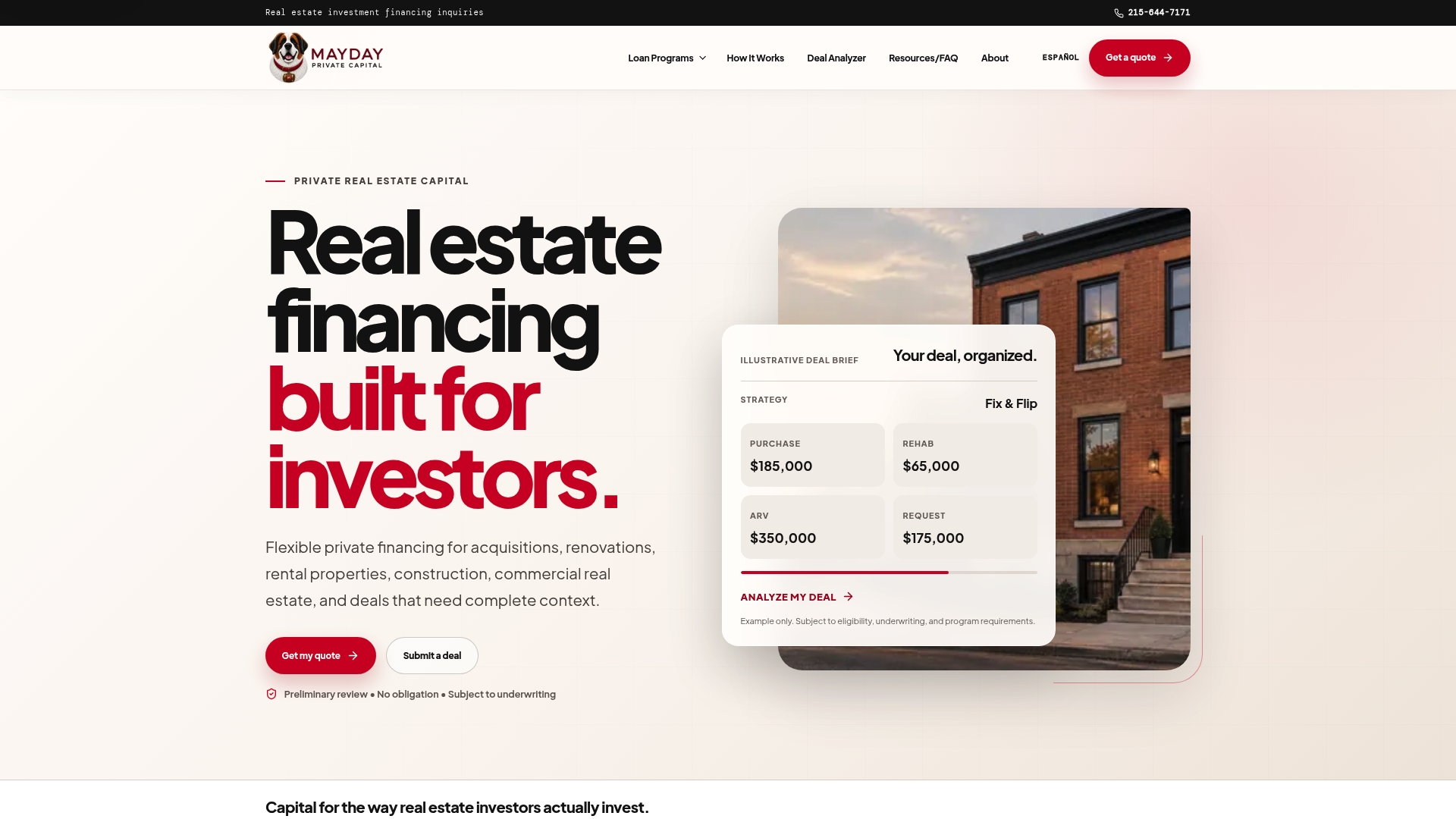
Start by running your numbers through the DSCR calculator to see where your deal stands against a 1.25x threshold. If the math works, visit the DSCR loans page to see program details, or head straight to request a preliminary review and get a real answer on your specific property instead of a generic rate sheet. For borrowers weighing a commercial acquisition against other financing types, the commercial real estate loans page lays out how those programs differ.
This article is general information, not a substitute for advice from a qualified financial advisor. Consult a qualified financial professional about your own circumstances before acting on anything here.
Sources
- Commercial DSCR Loans: Office, Retail, Industrial & More (2026)
- DSCR Loan Requirements 2026: What You Actually Need to Qualify | ProPilot Blog
FAQ
What Is the Minimum DSCR for a Commercial Loan?
Most commercial DSCR lenders set the minimum around 1.25x, meaning the property's net operating income needs to exceed its annual debt service by at least 25%.
Does DSCR Financing Work for a 5-Unit Multifamily Building?
Yes, but it falls under commercial DSCR rather than residential DSCR once a property reaches five units or more. That shift brings different documentation and qualification standards, including more detailed lease and NOI review.
How Much Down Payment Do You Need for a Commercial DSCR Loan?
Down payments typically run 20% to 30% of the purchase price, depending on your credit profile and how strong the property's DSCR is.
How Long Does Underwriting Take for a Commercial DSCR Loan?
Full underwriting generally takes two to four weeks after the preliminary review and term sheet stages, assuming no delays from missing documents or environmental holds. Total time from application to closing often lands between four and seven weeks for a straightforward deal.
Does Mayday Private Capital Offer Commercial DSCR Loans?
Yes, Mayday offers DSCR loans for income-producing commercial and multifamily properties, along with a free calculator and document checklist to help investors prepare. Current pricing and program details are available directly through Mayday's site rather than a fixed published rate.